Pretty Pictures, Murky Science: How Brain Imaging Studies Became Nootropic Marketing Gold
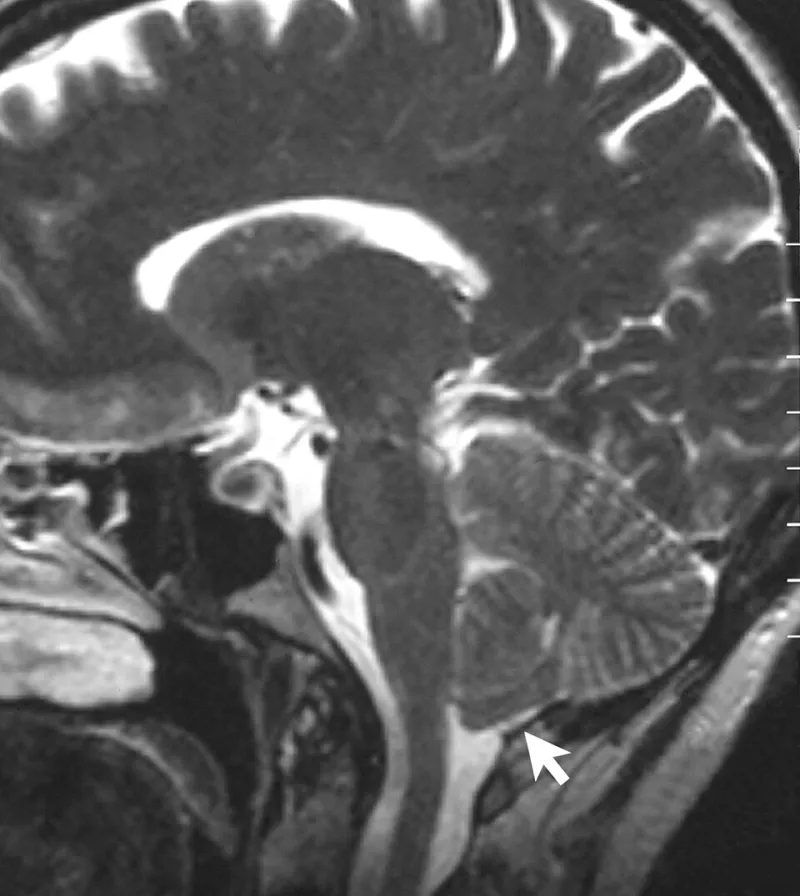
Photo: Raymond F Sekula Jr, Peter J Jannetta, Kenneth F Casey, Edward M Marchan, L Kathleen Sekula and Christine S McCrady, CC BY 2.0, via Wikimedia Commons
There is something viscerally convincing about a brain scan. The glowing reds and yellows spreading across a cortical map, the suggestion of measurable, visible change occurring deep inside the skull — it communicates scientific authority in a way that a bar chart simply cannot. Nootropic companies have noticed. Over the past decade, a growing number of supplement brands have begun funding or co-sponsoring neuroimaging studies — experiments using functional MRI, PET scanning, or quantitative EEG — and then deploying the resulting images prominently in their marketing materials.
The strategy is deliberate and, from a commercial standpoint, highly effective. But consumers owe it to themselves to understand exactly what these studies measure, who pays for them, and why a compelling brain visualization is not the same thing as evidence that a supplement will sharpen their thinking at work.
The Appeal of the Illuminated Brain
Neuroimaging technology was developed to help clinicians detect disease, map surgical risk, and advance fundamental neuroscience. It was not designed as a marketing instrument. Yet the supplement industry has found in it something invaluable: imagery that looks unambiguously scientific to a general audience, combined with a patina of institutional credibility.
When a nootropic brand publishes a study showing that subjects who took its product displayed increased activation in the prefrontal cortex during a working memory task, the implicit message is straightforward — the supplement is doing something measurable to your brain. The problem is that "measurable" and "meaningful" are not synonyms, and the gap between those two words is where a great deal of marketing sleight of hand occurs.
fMRI, for instance, does not measure neuronal activity directly. It measures blood-oxygen-level-dependent (BOLD) signals — a proxy for metabolic demand in a given brain region. Interpreting what a change in BOLD signal means for real-world cognitive performance requires considerable methodological care, statistical rigor, and, critically, independent replication. Studies funded by parties with a financial interest in a particular outcome introduce a variable that no amount of sophisticated equipment can neutralize.
Following the Money
Industry funding of supplement research is not inherently disqualifying. Academic-industry partnerships exist across every sector of biomedical science. The issue is transparency — or the consistent absence of it in how nootropic companies present their sponsored neuroimaging work to consumers.
A review of marketing materials from several prominent US-based nootropic brands reveals a recurring pattern. Studies are cited with institutional affiliations prominently displayed — a university name, a research center logo — while the funding source is buried in fine print, absent from the product page entirely, or disclosed only within a journal's conflict-of-interest statement that the average consumer will never read. The visual language of the brain scan does the persuasive work; the funding disclosure, if it exists at all, does not.
The financial stakes help explain the incentive structure. A credible neuroimaging study at a reputable institution can cost anywhere from $50,000 to well over $200,000 when equipment time, researcher compensation, and participant recruitment are factored in. Companies making that investment are not doing so out of pure scientific curiosity. They expect a return, and in the supplement industry, that return is a marketable result.
Researchers who accept industry funding are not automatically biased, but the published literature on funding effects in clinical research consistently documents a tendency toward outcomes favorable to the sponsor. A 2017 analysis in the journal PLOS ONE found that industry-sponsored nutrition studies were significantly more likely to report positive findings than independently funded research. There is no reason to assume neuroimaging studies in the supplement space are immune to this dynamic.
What Brain Activation Actually Tells Us — and What It Doesn't
Even setting aside funding concerns, the interpretive leap from a neuroimaging finding to a real-world performance claim is often unjustifiably large.
Consider a hypothetical scenario: a nootropic brand sponsors a study in which participants take its product and then complete a series of cognitive tasks inside an MRI scanner. The results show increased activation in the dorsolateral prefrontal cortex. The brand's website then describes this as evidence that its formula "activates your brain's executive function center."
What that framing omits is substantial. Increased regional activation does not necessarily indicate improved performance — in some contexts, greater activation reflects inefficiency, not enhancement, as a taxed brain recruits more resources to accomplish the same task. Furthermore, performance inside a scanner during a controlled cognitive paradigm does not reliably predict how a person will function across the varied, messy demands of an actual workday. The ecological validity of scanner-based cognitive tasks is a well-documented limitation in cognitive neuroscience, one that supplement marketers have little incentive to acknowledge.
EEG-based studies present similar interpretive challenges. Changes in alpha or theta wave power are real, measurable phenomena, but translating them into claims about focus, creativity, or stress resilience requires a chain of inferential steps that is rarely spelled out in consumer-facing marketing.
Small Samples, Selective Reporting
Another structural weakness in much of the nootropic-sponsored neuroimaging literature is sample size. Running participants through an fMRI protocol is expensive, which means many industry-funded studies operate with samples of 20 to 40 subjects — far too small to produce findings with robust statistical power or meaningful generalizability. Small samples increase the probability of both false positives and false negatives, and they make the results highly sensitive to the specific characteristics of the participant pool.
Selective outcome reporting compounds the problem. If a study measures 15 cognitive variables and 2 of them show statistically significant improvement, a company can choose to publicize those 2 findings while the remaining 13 disappear into a file drawer. Without pre-registration of study protocols — a practice that remains uncommon in supplement-sponsored research — consumers have no way of knowing how many outcomes were measured versus how many were reported.
What Informed Consumers Should Demand
None of this means that neuroimaging has no role in evaluating cognitive interventions. Used rigorously, with independent funding, pre-registered protocols, adequate sample sizes, and outcomes validated against real-world performance measures, brain imaging can contribute genuinely useful information. The problem is not the technology; it is the context in which supplement companies deploy it.
Consumers evaluating nootropic products that cite neuroimaging evidence should ask a consistent set of questions. Who funded the study, and is that disclosed on the product page — not just in a journal footnote? Was the study pre-registered, and can you locate the registration? How large was the sample, and was the participant population representative of you? Did the imaging findings correlate with validated behavioral outcomes, or did the company simply stop at the scan? Has the study been independently replicated?
If a brand cannot answer these questions clearly, the brain scan on its homepage should be treated as marketing collateral, not scientific evidence.
The Watchdog Verdict
Neuroimaging studies have become one of the nootropic industry's most sophisticated credibility tools — not because the science is strong, but because the imagery is compelling. A glowing brain map activates a form of trust that a list of ingredient dosages never could. That asymmetry between visual persuasion and actual evidentiary weight is precisely what makes this trend worth scrutinizing.
At Nootropic Watchdog, our standard is simple: extraordinary marketing claims require extraordinary evidence. A funded, small-sample, non-replicated brain imaging study does not meet that bar, regardless of how vivid the scan appears. Until the industry adopts transparent funding disclosure, pre-registration as standard practice, and genuine behavioral validation of neuroimaging findings, consumers should treat these studies with the same skepticism they would apply to any other form of sponsored content — because that is, in functional terms, exactly what many of them are.