Label Math: How Supplement Companies Hide Underdosed Ingredients Behind 'Clinically Studied' Claims
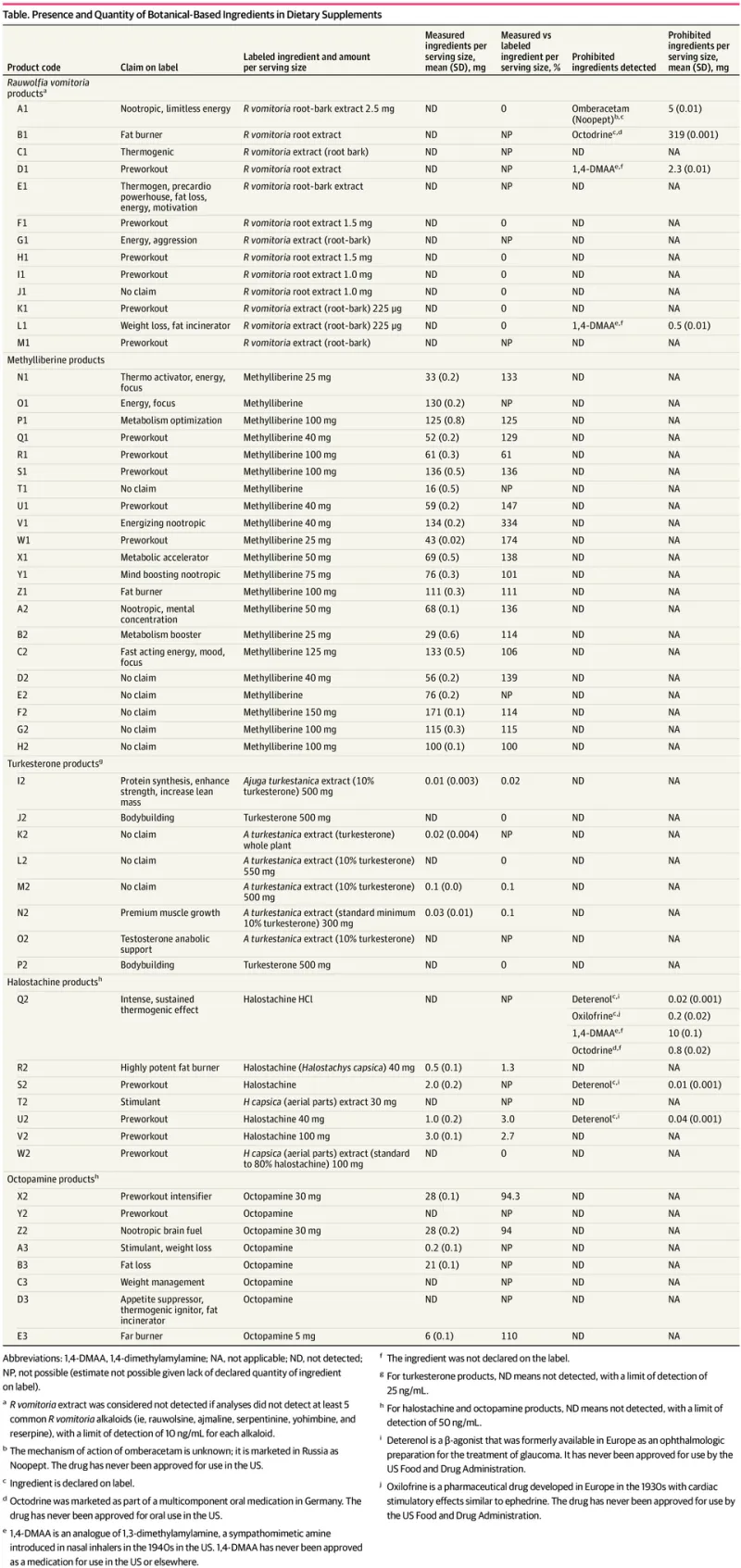
Photo: Authors of the study: Pieter A. Cohen, Bharathi Avula, Kumar Katragunta, John C. Travis, Ikhlas Khan, CC BY 4.0, via Wikimedia Commons
There is a phrase that appears on a remarkable number of nootropic supplement labels: clinically studied ingredients. It sounds rigorous. It sounds like an assurance. In reality, for a significant portion of products on the market, it functions as something closer to a legal shield—technically accurate, practically misleading.
The mechanism is straightforward. A manufacturer includes an ingredient that has, in fact, been studied in a peer-reviewed clinical trial. The marketing team references that trial. What the label does not tell you—and what most consumers never think to check—is whether the dose inside the capsule bears any meaningful resemblance to the dose used in the research.
This is not a fringe problem. It is arguably one of the most pervasive forms of deception in the supplement industry today.
The Research-to-Label Gap, Explained
To understand how this works in practice, consider a well-documented example: lion's mane mushroom (Hericium erinaceus), a fungal extract that has generated genuine scientific interest for its potential effects on nerve growth factor and cognitive function.
One of the most-cited human trials on lion's mane—a 2009 double-blind study published in Phytotherapy Research—used 3,000 mg per day of a standardized extract. That is the dose at which researchers observed statistically significant improvements in cognitive function scores among older adults with mild cognitive impairment.
Now scan the labels of popular nootropic blends. It is common to find lion's mane listed at doses ranging from 100 mg to 500 mg. Some products include as little as 50 mg. The manufacturers may still reference clinical evidence in their marketing. They are not wrong that evidence exists. They are simply not telling you that their product delivers somewhere between 1.6% and 16% of the dose that generated those results.
Why This Happens: Economics and Label Optics
The economics are not complicated. High-quality nootropic ingredients at research-validated doses are expensive. A full therapeutic dose of lion's mane, bacopa monnieri, or phosphatidylserine can cost several dollars per serving at wholesale. Multiply that across a multi-ingredient formula, and the manufacturing cost of a single capsule becomes commercially unworkable for brands competing on price.
The solution, for many companies, is to include token amounts—sometimes called "fairy dusting" in industry parlance—that keep the ingredient on the label without meaningfully affecting the cost of goods. The result is a product that looks comprehensive on paper and performs poorly in practice.
Proprietary blends compound this problem significantly. When a label lists a "Cognitive Performance Matrix" weighing 800 mg in total, with eight ingredients inside it, the consumer has no way of knowing how that weight is distributed. One ingredient might account for 750 mg; the remaining seven might each contribute less than 10 mg. The brand is not required to disclose this breakdown under current FDA labeling rules for dietary supplements.
How to Identify Underdosed Products
The good news is that this gap is identifiable if you know what to look for. Here is a practical framework.
Step one: Look for full label transparency. Avoid proprietary blends where individual ingredient amounts are hidden. Reputable manufacturers list every ingredient with its precise dose. If a product does not do this, you cannot evaluate it meaningfully.
Step two: Identify the reference doses. For any ingredient you care about, spend five minutes searching PubMed or Examine.com for human clinical trials. Note the doses used in studies that showed positive outcomes. These are your benchmarks.
Step three: Run the math. Compare the label dose to the benchmark. If the label contains 150 mg of bacopa monnieri and the relevant clinical trials used 300–450 mg, you are looking at a product that delivers, at best, half the research dose. Whether that half-dose produces any meaningful effect is largely unknown—because it often has not been studied independently.
Step four: Question the marketing language. Phrases like "standardized extract," "enhanced bioavailability," and "concentrated formula" are sometimes legitimate and sometimes used to justify lower doses without clinical evidence supporting the equivalency claim. Ask for the specific study that validates the dose in the product—not just the ingredient in general.
The Bioavailability Caveat
It is worth acknowledging a legitimate counterargument. Bioavailability does matter, and some formulations genuinely improve the absorption of an ingredient to the point where a lower dose may be more effective than a higher dose of a less bioavailable form. Curcumin is the canonical example: standard curcumin has notoriously poor oral bioavailability, and certain patented delivery systems—such as Longvida or Meriva—have published data supporting enhanced absorption.
However, this argument is frequently invoked without supporting data. A company claiming that its proprietary extraction process makes 100 mg equivalent to 500 mg of a standard extract should be able to produce pharmacokinetic data demonstrating that claim. In most cases, no such data exists, and the bioavailability argument functions as a rhetorical escape hatch rather than a scientific justification.
What Regulators Are—and Are Not—Doing
The FDA does not evaluate dietary supplements for efficacy before they reach the market. The agency's role is primarily to ensure that products are not adulterated or misbranded in ways that create direct safety risks. A supplement that contains an underdosed ingredient is not, in the FDA's current framework, considered misbranded—even if the marketing implies clinical-level effects.
The Federal Trade Commission has jurisdiction over advertising claims and has taken action against supplement companies for deceptive marketing practices. But enforcement is reactive and resource-limited. The burden of skepticism, in practice, falls on the consumer.
The Bottom Line
The phrase "clinically studied" should be the beginning of your inquiry, not the end of it. When you see it on a label, the relevant follow-up questions are: studied at what dose, in what population, and with what outcome? Until you can answer those questions and compare them to what is actually inside the product, the claim tells you very little.
Transparent dosing, full label disclosure, and verifiable research alignment are the minimum standards a nootropic product should meet before it earns your money. Anything less is label math designed to work in the manufacturer's favor—not yours.